
The long journey of seafood to the plate
Most people regard the seafood available in restaurants or in stores as a kind of delicacy. But few people know how complicated and rigorous its route is, from the time it is caught until it is beautifully presented on plates.
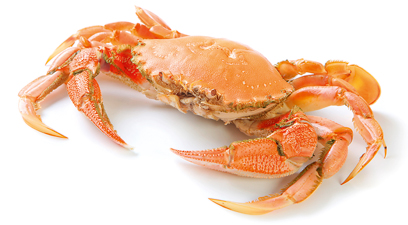
Over a 20-minute span, Adriana Radian, sales manager of R Family
Prodservcom, one of the several dozens of seafood importers in
Romania, has received no less than six phone calls from clients.
Some were renewing orders, others were asking for price offers, and
yet others were looking for new specialties to introduce into their
menu. It was a Wednesday, when telephones never stop ringing,
announcing orders for Friday, the day when Radian, in turn, sends
the list to suppliers.
Her biggest supplier is in the Netherlands, in a fishing village,
which has 40,000 inhabitants and 40 firms involved in this type of
trade, i.e. one firm per 1,000 inhabitants. Urk (the Dutch fishing
village) is the source of fresh products for the company run by
Adriana Radian, as well as for the other companies that sell fish
and seafood in Romania. In fact, the Netherlands also accommodates
one of the world’s largest fish markets. Every week, merchants
change prices and, based on what happens there, the other exporters
across the world also change their price policy.
As for the price gap between fresh products and frozen ones, it is
staggering. “Cook frozen seafood? Never!” says Joseph Haddad, head
chef at Casa Vernescu in Bucharest, almost offended by the
question. During the course of his career, he has cooked for major
personalities that include Bill Clinton, prince Juan Carlos of
Spain, Madonna and Michael Jackson. Therefore, he is very demanding
when it comes to the products he orders – they have to be the right
size, colour and texture, be kept in adequate containers and they
need to be fresh. Haddad says he sends his orders to the supplier
every Sunday night and expects the seafood to arrive no later than
Tuesday.
The price paid for all this is by no means small. A kilo of black
caviar, for instance, costs 1,200 euros, and this is just the
supplier price. That is why seafood varieties are listed as
specialties in restaurants, with a lobster meal costing around 200
RON, whilst langoustines or coquilles Saint Jacques approach 100
RON. Also, few people know that, for most delicacies, it takes a
maximum of 48 hours from the time when the seafood is caught until
it is served, with every hour chipping away at its value.
-
 După ce a anunţat că renunţă la circa 100.000 de angajaţi până în 2030, unul dintre cei mai mari producatori auro îşi reduce şi mai mult previziunile pentru 2026, pe fondul cifrelor dezastruoase din China
-
 Grindeanu,nou atac la adresa lui Mureşan:Persoanele care fac asemenea lucruri nu pot ocupa demnităţi
-
 Tensiuni pentru companiile cu afaceri în Rusia: Moscova a preluat controlul operaţiunilor Nestlé şi Auchan din Rusia. Retailerul francez are 230 de magazine şi 30.000 de angajaţi