
The demographic bomb
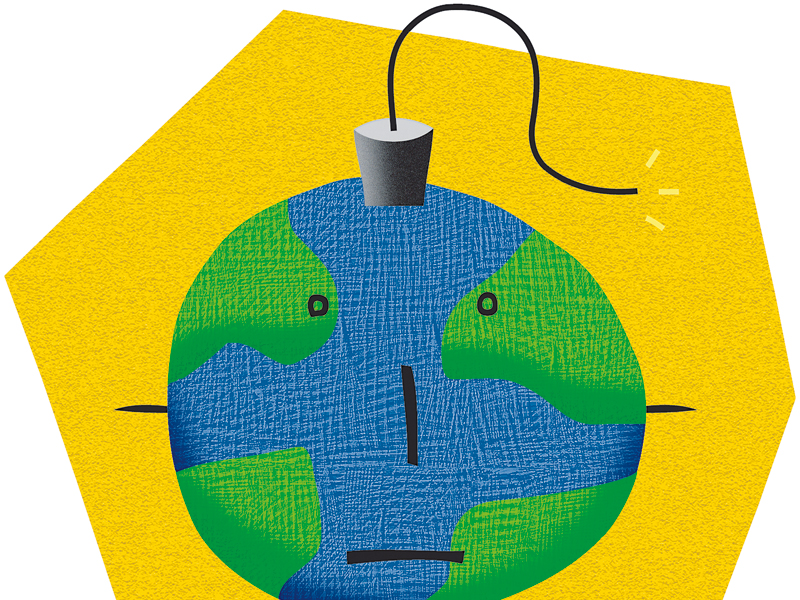
The agenda of the future president and of the next government should include at the top of the list the demographic issue, because their terms are the period when something can still be done to defuse Romania’s demographic problem. This is a time bomb where time is measured in human lives.
“After the end of the Cold War, the ageing of the population
will be the biggest challenge for Europe. Yet because demographic
changes are so slow, we are in danger of overlooking them.” This is
the warning of the former German chancellor Helmut Kohl from 1994,
issued at a meeting of heads of state and government from the
European Union. A decade and a half later, the demographic changes
are somewhat more visible, but many of the European leaders, coming
from a different generation than Helmut Kohl, seem determined to
ignore his warning. However, the phenomenon is real: significant
parts of Europe’s population are ageing and Romania is and could
become one of the worst affected nations. The phenomenon brings
about a number of changes, in the pension system, in the social
security, in medicine, in consumption habits, in the population
structure. Some of them are benign, others can be managed, but
pensions and social security already are or will be in serious
trouble.
A survey of the International Monetary Fund estimated three years
ago that the pensioners/active population ratio would halve in
Europe by 2050, from four to two active people for each pensioner.
Also in 2006, a report of the European Commission estimated that
the workforce in the EU would go down by 48 million people, that is
16% from 2010 through 2050, while the number of elderly people
would go up by 77%, that is 58 million people. In other words,
Europe is slowly heading towards a sci-fi film scenario, with a
touch of comedy: a retirement home continent, with many old people
and delicate Asian or Indian nurses watching over them.
Let us imagine another equally tragicomic scenario: instead of baby
food or diaper commercials, we will see commercials advertising
food and personal care products for the elderly, while the
voluptuous women who have taken over our TV screens today -what
other type of character could convey the message of those
manufacturing goods for young people? – will be replaced by
respectable middle-aged ladies. To the rich Europe such a scenario
is, from the elderly man’s standpoint, bearable, and from the
standpoint of the authorities, passable, as wealth will always
attract youth energy. How is it for the poor Europe and especially
for Romania?
As far as Romania is concerned, the scenarios, devised by either
international bodies, or local experts are as pessimistic as they
get: following the about two million people decline after the
Revolution, Romania’s population could reach somewhere between 13.3
million inhabitants according to EBRD and 16-17 million, according
to surveys of the European Union, the World Bank and the UN. The
fertility rate has gone down from 2.3 children/woman in 1989 to 1.3
children/woman in 2008 (a constant level in the last twelve years)
and the birth rate (the gross number of births per one thousand
people per year) has gone down from 13.7/1000 in 1990 to 10/1000 in
2008.
It also needs to be said that the average life span has gone up in
the years after the Revolution from 70 to 74 years.The demographic
picture must also include the main trends registered in the world,
as identified by professor Jack Goldstone from George Mason
University: along with the reduction in population in the European
and former USSR space, there are also the massive increases in
Muslim countries, the migration from the third world towards
developed countries, the impact of AIDS and pandemics, the rapid
growth and the increasingly more important role of urban population
in the third world. Amid the overall changes induced by demographic
trends, the pension system is the most threatened and
exposed.
-
 Viorel Panaite, Managing Partner, Human Invest: Fug angajaţii de responsabilitatea de a conduce oameni?
-
 Irina Barbu, IT Lead, ING Hubs România – Tech Foundation and Channels: „Performanţa apare atunci când oamenii au claritate, sprijin şi spaţiu să-şi facă treaba bine”
-
 Paul Cosmovici, Managing Partner, Cosmovici Intellectual Property: România autentică, dar neprotejată. Gust tradiţional, mândrie naţională, proprietate intelectuală