
Kids are good for business
Despite the crisis that upset the plans of the companies in most sectors, the business of products and services for kids continues to do well. Regardless of the age, income, education or geographic region, parents spend one third of the family budget on average to support and raise their children.
It is probably a paradox, but the youngest members in families
with children attract the biggest expenses from the household
budget. According to BUSINESS Magazin’s calculations, the market of
goods and services aimed at those over 4 million kids and teens in
Romania aged up to 18 exceeds 3 billion euros a year, which is more
than the cumulated sales registered by Metro and Carrefour – the
biggest store chains on the market, last year. Expenses made for
kids are going up every year, stimulating the business of products
and services aimed at them.
Two are the factors that lead to the growth of this market: on the
one hand, the parents’ expenses increase as kids get older, while,
on the other, consumer behaviour changes; as incomes increase, so
do parents’ standards who choose better quality products, which are
more expensive. It is hard to determine an exact value, because out
of the 4 million kids and teens up to 18 years of age, one quarter
are older than 12, and expenses can no longer be separated from
those of their parents when it comes to cosmetics, computer games,
clothing or food. “Regardless of age, most money go to food,
clothing and footwear,” says Alecsandra Fulga, business development
manager at market research company 360insights. Of course, whereas
expenses for primary goods are the most important in the first few
years of children’s lives, over the years education and leisure
budgets are added, says Fulga, quoting the Omnibus-type survey
conducted by 360insights.
For learning materials, clothing and footwear manufacturers, this
is peak season; the same goes for private schools. As for many
other segments, from food to cosmetics or care, which are not
influenced by seasons as much – the autumn generates a constant
flow to producers and sellers’ accounts. Moreover, while other
fields are suffering from decline, stagnation is the worst piece of
news in the industry of products targeting kids; for most
categories, sales are still going up at a two-digit rate. There are
two clear reasons, believes Diana Stoian, psychologist and
psychotherapist: “First of all, the kid is seen as a complement to
the idea of fulfilment and achievement in one’s life,” – as such,
even though parents have had to cut expenses in the overall family
budget, they will spare no expense when it comes to their children.
“Second, the fast-paced living, which reduces the time allocated to
family, makes parents see the material comfort of their kids as a
compensation.”
Worth 60 million euros in 2008, the market of foods for young
children aged up to three, will grow by 15% this year, estimates
Andreia Stanciu, category manager CCSD of Nestle Romania, which is
the leader of this market with a 46% share in terms of value,
according to 2009 data of market research company Nielsen.
“Baby food products are a dynamic category, with growth from one
year to another,” Stanciu says. The growth trend remains, even
though at a slower pace than before. Infant and baby milk formulas
are the most important segment, accounting for 71% in value in 2008
and having gone up by more than 30% last year compared with 2007,
according to Nielsen data quoted by the Nestle
representative.
Companies in this business expect 2010 to end with higher sales
than this year, forecasting 10% growth, says Eric van der Hoeven,
managing director of Milupa Hungary & Romania.
-
 După ce a anunţat că renunţă la circa 100.000 de angajaţi până în 2030, unul dintre cei mai mari producatori auro îşi reduce şi mai mult previziunile pentru 2026, pe fondul cifrelor dezastruoase din China
-
 Grindeanu,nou atac la adresa lui Mureşan:Persoanele care fac asemenea lucruri nu pot ocupa demnităţi
-
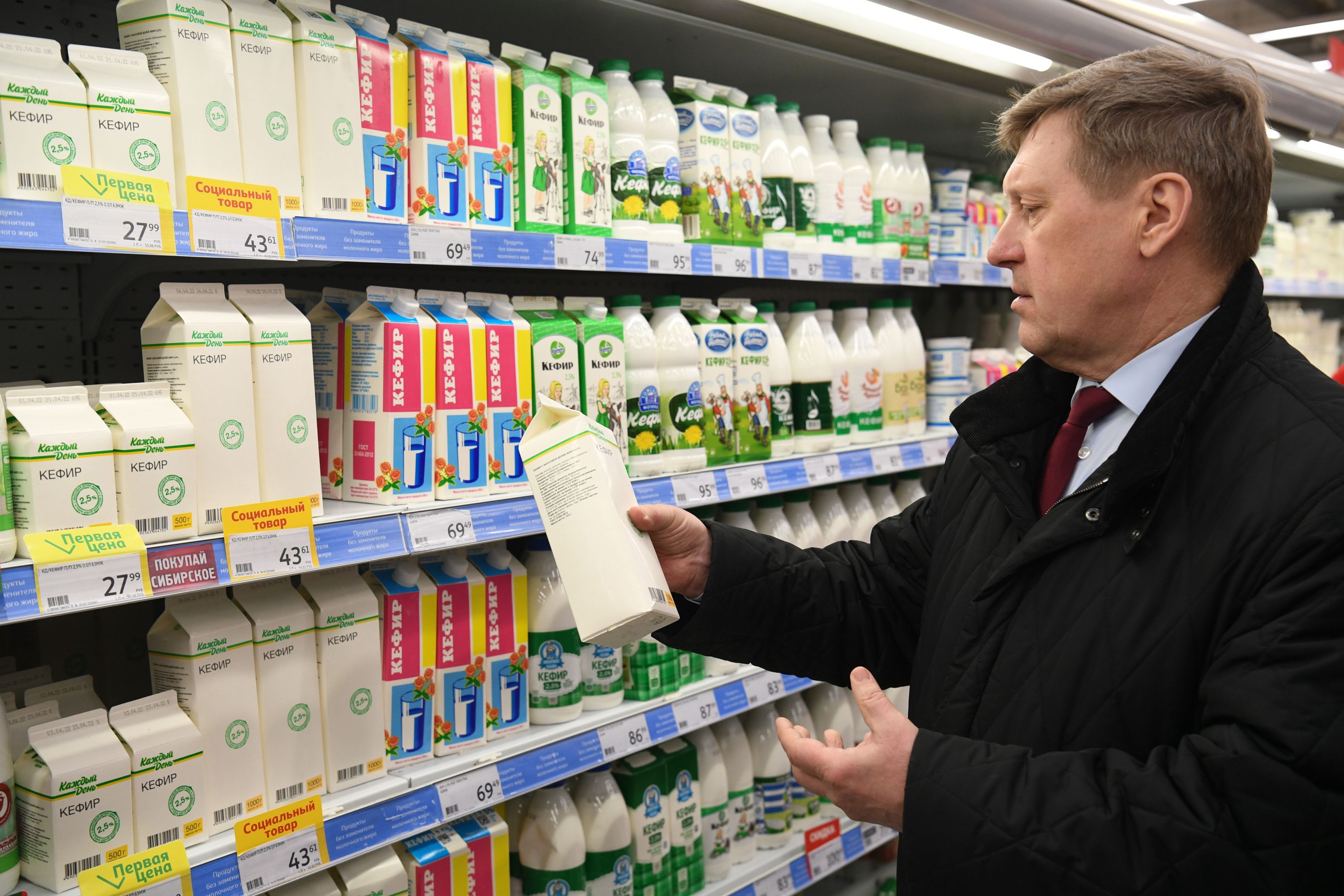 Tensiuni pentru companiile cu afaceri în Rusia: Moscova a preluat controlul operaţiunilor Nestlé şi Auchan din Rusia. Retailerul francez are 230 de magazine şi 30.000 de angajaţi