
It’s neither Rome nor Paris
The locals prepare dozens of sausage specialties, but they are not Germans. Football is almost a religion, but they are not Turks. They have Roman constructions that date back to the era before Christ, but this is not Rome. Although it yearns to be called the City of Lights, Paris remains the rightful holder of the title.
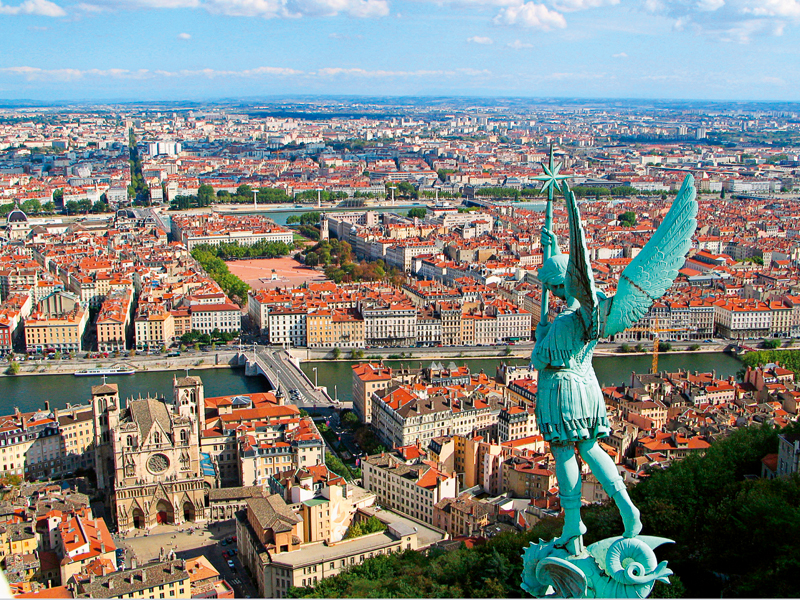
“You have a team in the groups too, don’t you? I know it has had
good results, we are hoping to get as far as possible,” Romain
Raimbault, a manager of the tourist centre of the Rhône-Alpes
region in south-east France says smilingly. He is of course talking
about the football Champions League. His job of the last few years,
attracting tourists from Central Europe, has been made easier after
Olympique Lyon won the French football championship in 2002. A
series of seven consecutive titles then led to correlated earnings
of tens of millions of euros, according to local officials, and to
an increase in the annual number of tourists. Lyon, the capital of
Rhône-Alpes, has always been behind Paris and the Côte d’Azur in
terms of number of visitors, but local officials are trying at
least to outrank their southern neighbours. And they do have
reasons to be proud of themselves: it has a population of around
475,000, and boasted around six million visitors in 2008. This
compares with 40 million annual visitors in the Paris region.
“There are fewer tourists this year, but I wouldn’t say their
number has dropped significantly. The countries they come from are
not the same, there are no longer as many British tourists, but
there are French ones, for instance,” Fayet Trevy, a travel guide,
says when asked if his working schedule was more relaxed in 2009.
He then carries on with his explanations and stories about
buildings in Vieux Lyon, the city’s oldest quarter, which he is
leading us through. “You see these inner courtyards? They are
specific to this area and used to be helpful shortcuts from one
street to another in the wars of the past.”
Vieux Lyon, whose buildings date back to the 14th century, is one
of the first places you will be recommended to go to when you visit
the city, and one of the first things you will be told is that the
area was designated a UNESCO world heritage site in 1998.
Constructing a new building here is almost impossible due to the
very strict regulations. There are even buildings completely
abandoned by their owners, which have not however been torn down,
because they are the city’s “heritage”, as the guide says, almost
surprised at the idea that new buildings could be built to replace
abandoned ones.
-
 Viorel Panaite, Managing Partner, Human Invest: Fug angajaţii de responsabilitatea de a conduce oameni?
-
 Irina Barbu, IT Lead, ING Hubs România – Tech Foundation and Channels: „Performanţa apare atunci când oamenii au claritate, sprijin şi spaţiu să-şi facă treaba bine”
-
 Paul Cosmovici, Managing Partner, Cosmovici Intellectual Property: România autentică, dar neprotejată. Gust tradiţional, mândrie naţională, proprietate intelectuală